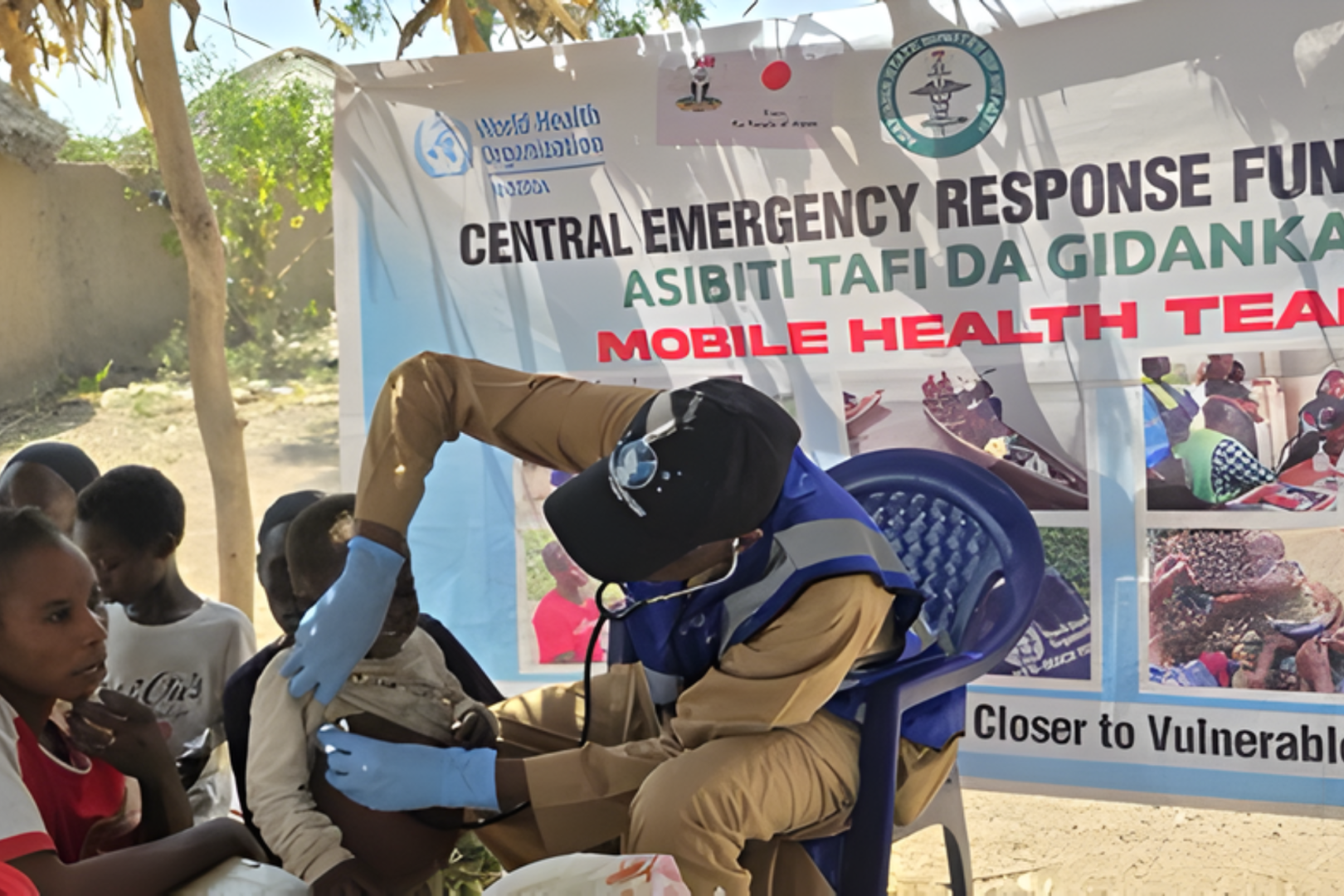
Mobile outreach expands access to health services in Adamawa State
Yola – Targeted outreach is improving access to essential health services in underserved communities across Adamawa State, where distance, insecurity and seasonal flooding have long limited the reach of fixed health facilities.
Despite ongoing efforts to strengthen primary health care, many remote communities continue to face barriers to routine services, including immunisation, antenatal care, chronic disease management, mental health and psychosocial support, and services for survivors of gender-based violence (GBV). These challenges disproportionately affect women, children, people living with disabilities and populations affected by displacement.
In response, the Adamawa State Government, through the Ministry of Health and the State Primary Health Care Development Agency, deployed 10 mobile clinics to deliver integrated services in hard-to-reach areas. The initiative is implemented under government leadership, with technical support from the World Health Organization (WHO) and funding from the United Nations Central Emergency Response Fund (CERF).
Between September and December 2025, the mobile clinics conducted more than 410 outreach visits across 10 local government areas, engaging over 350 500 people. Services provided included antenatal and postnatal care, routine immunisation, outpatient consultations, nutrition screening and counseling, reproductive health services, mental health and psychosocial support, health promotion, disease surveillance, and GBV prevention and response.
From exclusion to access
For Musa Ali, a 22-year-old from Mafiya village in Song local government area, the outreach marked a significant change. He had lived for years with uncontrolled seizures, often experiencing multiple episodes each month. The nearest health facility was about 7 kilometers, transport was scarce and unaffordable, and he had never received a formal diagnosis.
During a mobile clinic visit, health workers assessed Musa, diagnosed epilepsy and initiated treatment. They provided counseling and follow-up guidance, while his family received training on seizure management and safe care practices.
Within weeks, his seizures reduced significantly. He regained strength and resumed daily activities. His experience encouraged others in the community to seek care for similar symptoms, contributing to reduced stigma associated with mental and neurological conditions.
Integrated services in hard-to-reach communities
Each mobile clinic is staffed by nurses, community health extension workers, psychosocial counsellors, mental health focal persons and GBV officers, with doctors providing periodic supervision. This multidisciplinary model allows multiple health, and protection needs to be addressed during a single visit—an important approach in communities reached intermittently.
By the end of 2025, more than 172 000 people had received mental health and psychosocial support through mobile clinic outreach. This included over 3 600 people living with epilepsy, nearly 1 900 with depression, 891 with substance use disorders, and individuals presenting with psychosis or self-harm–related conditions. During the same period, 812 survivors of GBV accessed confidential clinical care, psychosocial first aid and referral services.
Beyond direct service delivery, the outreach strengthened community confidence in the health system and improved identification and referral of individuals requiring continued care.
Advancing universal health coverage
“Taking services directly to communities demonstrates our commitment to ensuring that no one is excluded from care because of where they live,” said Dr Bashir Sulaiman, Executive Secretary of the Adamawa State Primary Health Care Development Agency.
“WHO worked closely with the State Ministry of Health to prioritise communities affected by flooding and insecurity, using CERF anticipatory funding to deliver services before needs escalated. This approach strengthened preparedness and continuity of care,” said Dr Yusuf Abdulhakeem, WHO State Coordinator in Adamawa. “They contribute to advancing universal health coverage.”
Increased and predictable investment in the health workforce, essential medicines and last-mile delivery systems is required to deliver impact at scale, particularly for communities affected by insecurity and displacement. Continued commitment from government, partners and donors will be critical to closing access gaps, protecting vulnerable populations, and strengthening primary health care.
Communications Officer
WHO Nigeria
Email: hammanyerok [at] who.int (hammanyerok[at]who[dot]int)